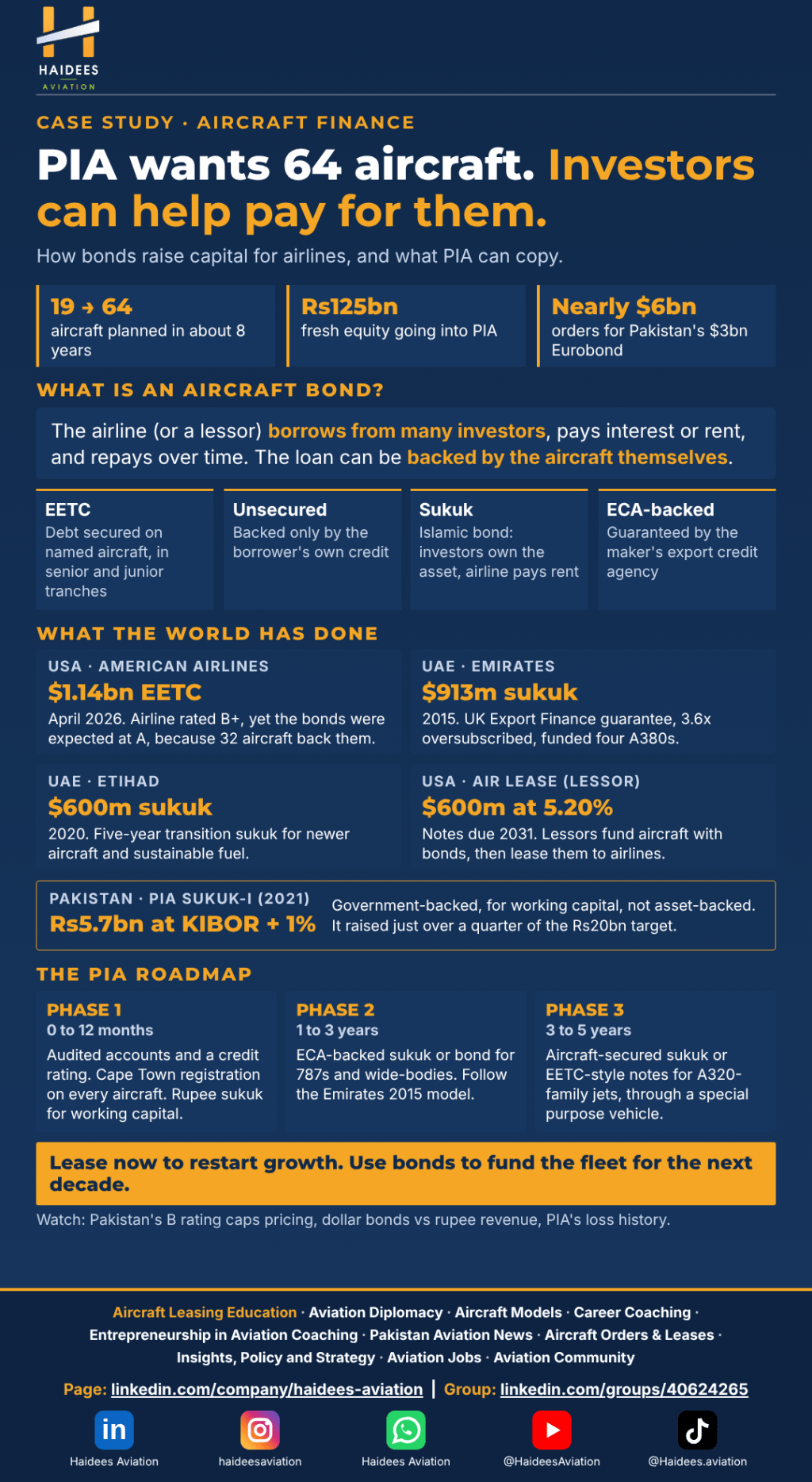
PIA wants 64 aircraft. Who pays for them? PIA plans to grow from 19 aircraft to 64 in about eight years. Banks and lessors alone will not carry that. Bonds can help, if PIA builds the right credit story first.
What is an aircraft bond?
A bond is a loan split into many small pieces and sold to investors. The airline, or a lessor, receives a large sum today, pays interest or rent on a schedule, and repays the principal over time. In aircraft finance there are four common forms:
- EETC (enhanced equipment trust certificate): debt secured on named aircraft, sold in senior and junior tranches.
- Unsecured bond: backed only by the borrower’s own credit.
- Sukuk: an Islamic bond where investors own the asset and the airline pays rent.
- ECA-backed bond or sukuk: guaranteed by the export credit agency of the aircraft maker’s country.
What the world has done
- American Airlines, April 2026: about $1.14 billion EETC backed by 32 aircraft. The airline is rated B+, yet the bonds were expected at A.
- Emirates, 2015: a $913 million sukuk guaranteed by UK Export Finance, 3.6 times oversubscribed, which pre-funded four A380s.
- Emirates, 2018: a $600 million, 10-year amortising sukuk at 4.5%.
- Etihad, 2020: a $600 million, five-year transition sukuk for newer aircraft and sustainable fuel.
- Air Lease Corporation (lessor), 2024: $600 million of 5.20% notes due 2031. Airlines that lease already use bond money.
- PIA Sukuk-I, 2021: Rs5.7 billion at one-month KIBOR plus 100 basis points. It was government-backed, used for working capital and not asset-backed, and reached just over a quarter of its Rs20 billion target.
Where PIA stands
- The Arif Habib-led consortium took control in June 2026. Rs125 billion goes into the airline as fresh equity.
- The plan is 19 aircraft to 64 in about eight years.
- The government says it will not buy aircraft or give sovereign guarantees.
- Pakistan’s market access is improving: S&P upgraded it to B in July 2026, and its $3 billion Eurobond in September drew nearly $6 billion in orders.
A roadmap for PIA
This is my proposal, not an announced plan.
- 0 to 12 months: audited accounts, an international credit rating, Cape Town registration on every aircraft, and a rupee sukuk for working capital.
- 1 to 3 years: ECA-backed sukuk or bonds for 787s and other wide-bodies, following the Emirates 2015 model.
- 3 to 5 years: aircraft-secured sukuk or EETC-style notes for A320-family jets through a special purpose vehicle.
Risks to watch: Pakistan’s B rating caps pricing, dollar bonds against rupee revenue, and PIA’s loss history.
Bottom line: lease now to restart growth, and use bonds to fund the fleet for the next decade.
Educational analysis, not investment advice.
Follow the Haidees Aviation LinkedIn Page and join the LinkedIn Group. Email: haidees.aviation@gmail.com


Leave a Reply