Category: Aircraft Leasing Education
-
Maintenance reserves explained
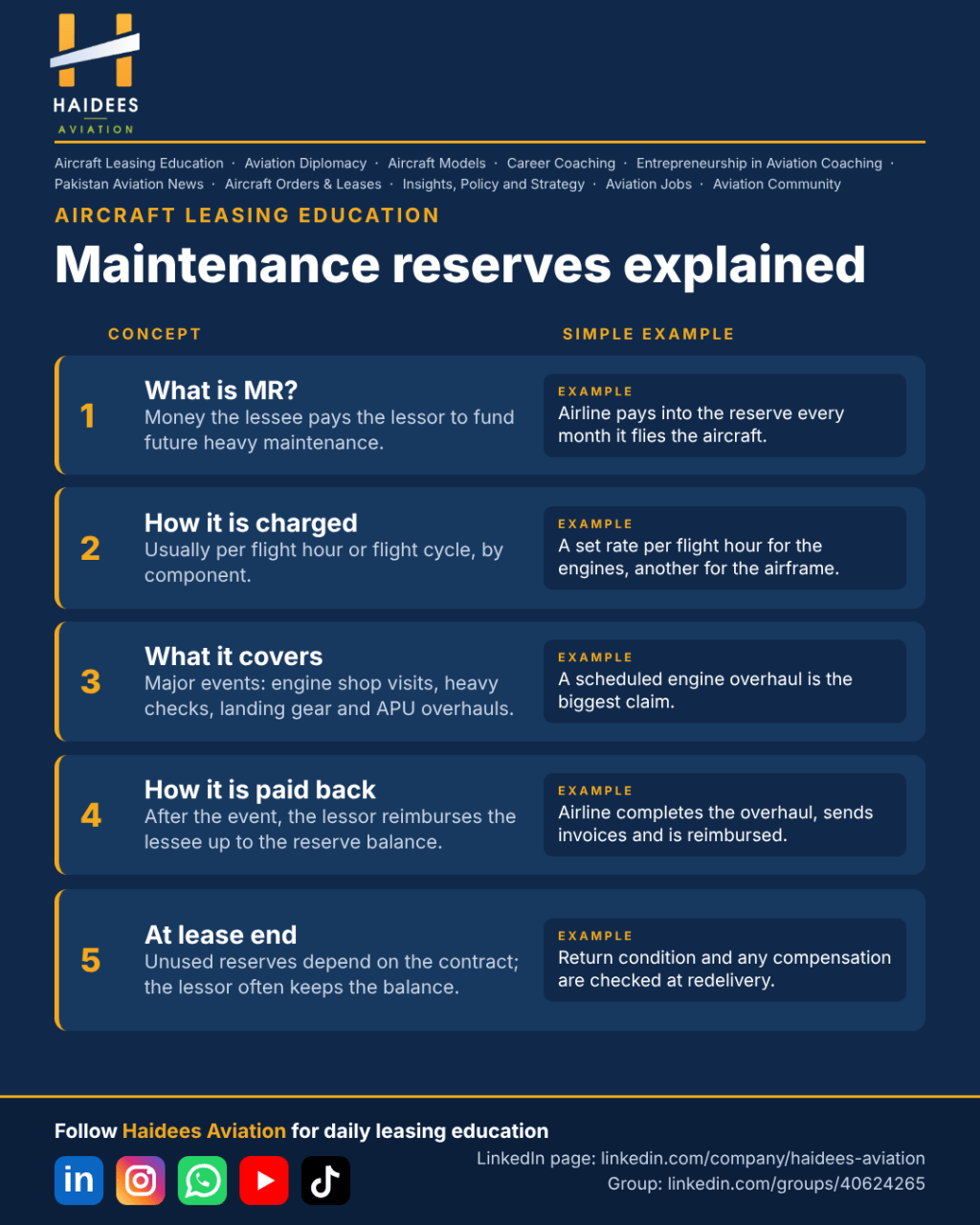
Heavy maintenance is the biggest bill in an aircraft’s life, and a maintenance reserve is how a lease prepares for it. What is MR? Money the lessee pays the lessor to fund future heavy maintenance. The airline pays into the reserve every month it flies the aircraft. How it is charged: usually per flight hour…
-
5 risks in aircraft finance
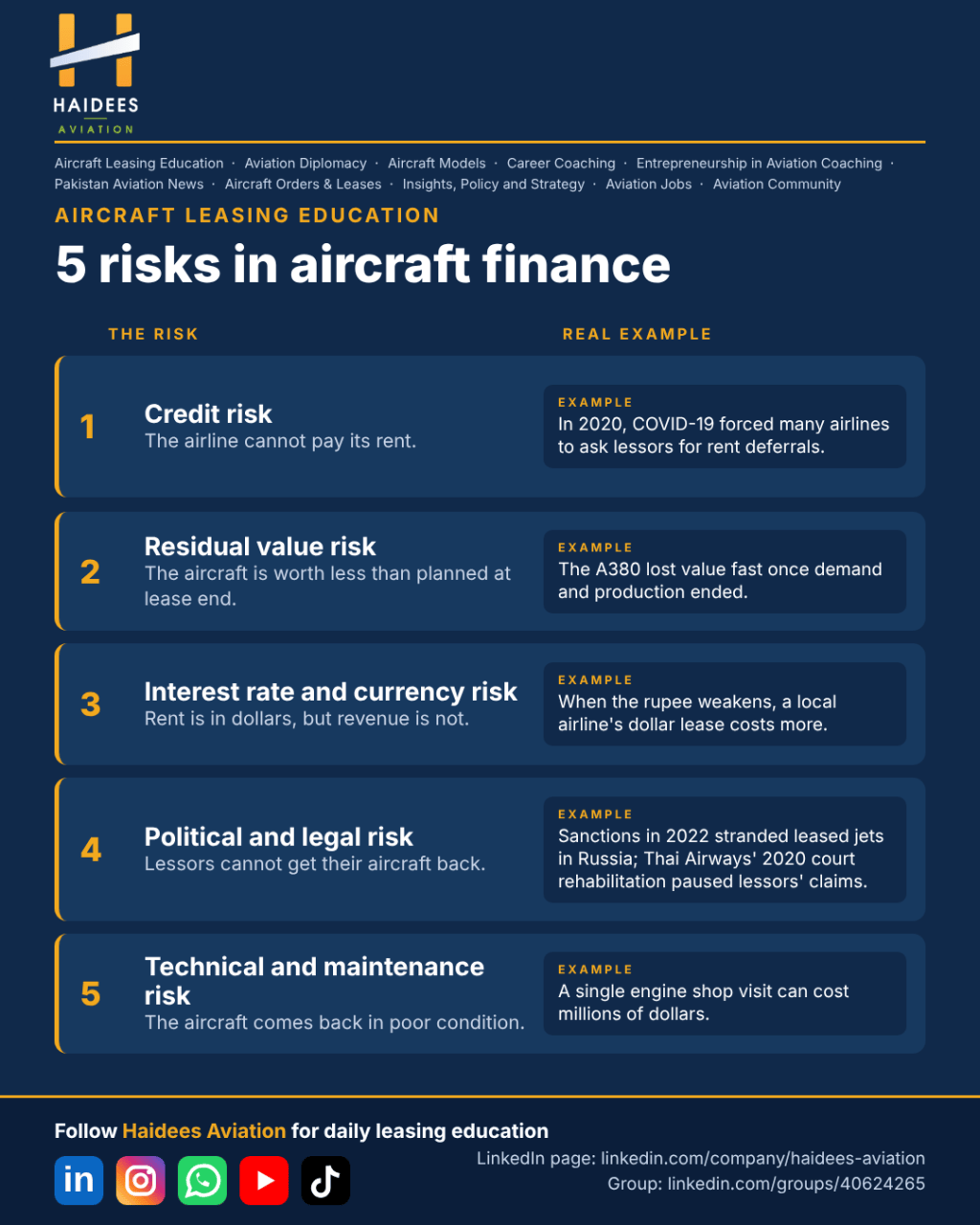
One bad lease can ground a whole balance sheet. These are the five risks every aircraft financier watches, with real examples. Credit risk: the airline cannot pay its rent. In 2020, COVID-19 forced many airlines to ask lessors for rent deferrals. Residual value risk: the aircraft is worth less than planned at lease end. The…
-
The LOI: where every lease starts
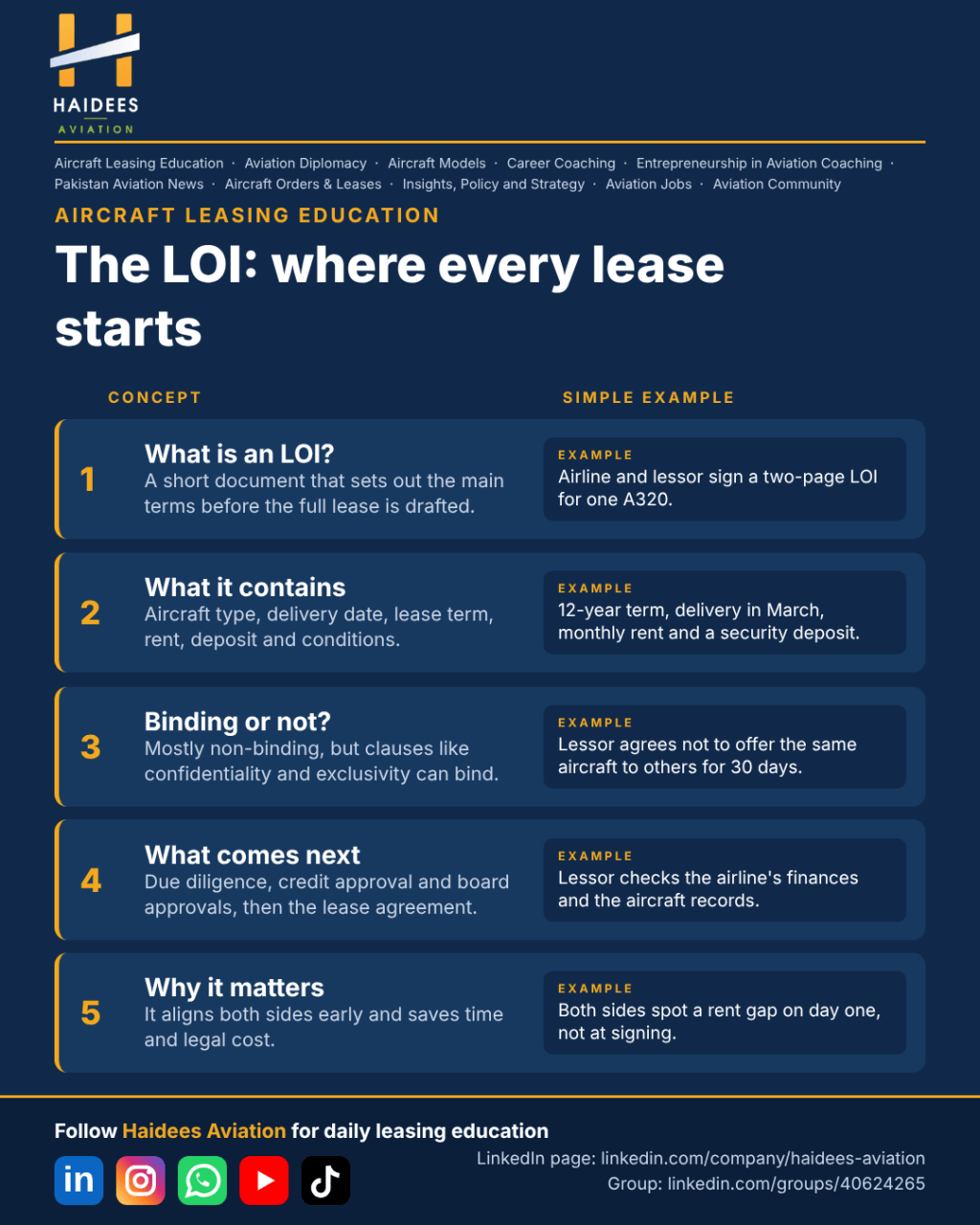
Every aircraft lease starts with a short document that both sides sign before the lawyers get busy: the Letter of Intent. What is an LOI? A short document that sets out the main terms before the full lease is drafted. Example: airline and lessor sign a two-page LOI for one A320. What it contains: aircraft…
-
ACMI: narrowbody vs widebody
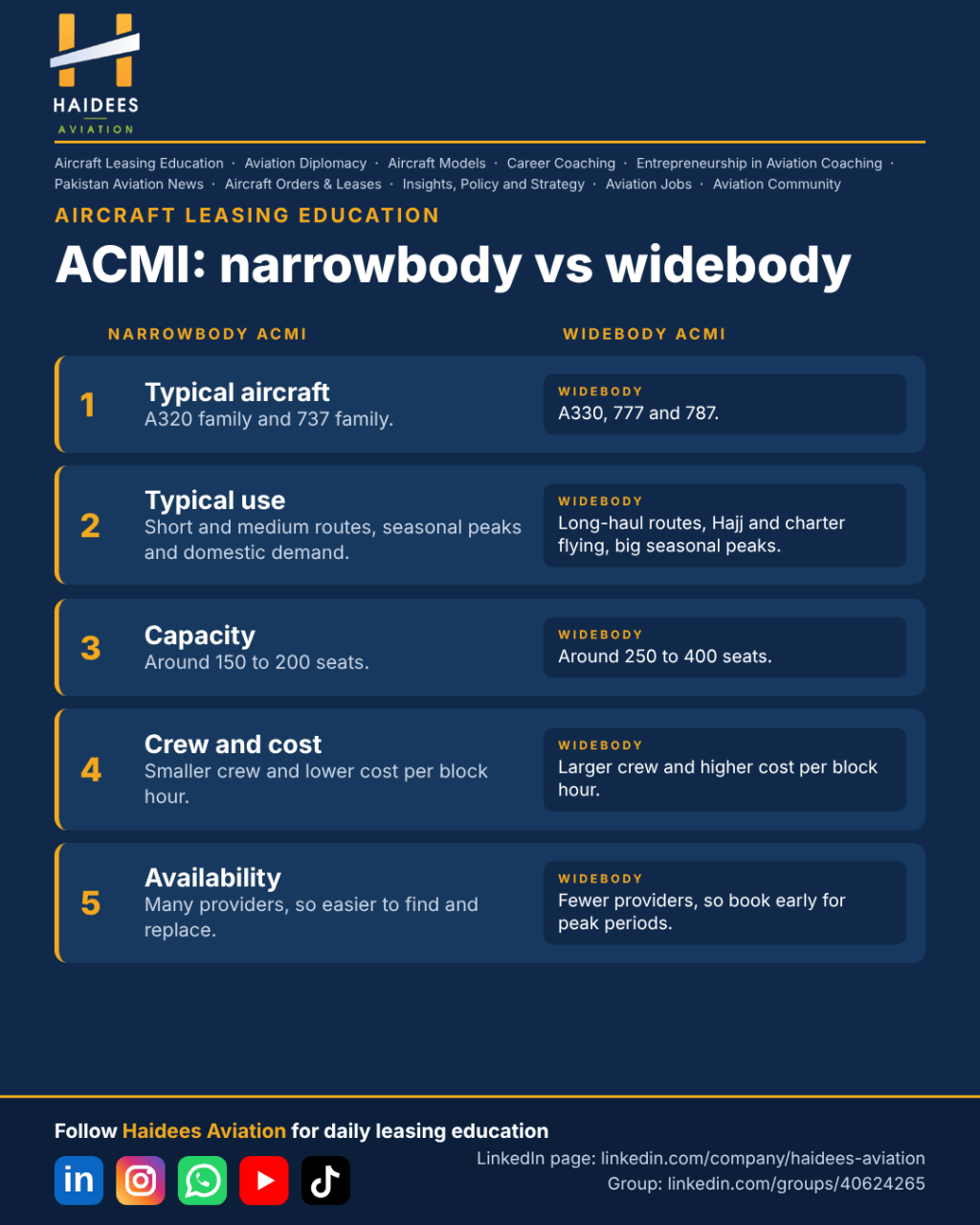
Not every ACMI deal is the same size. Here is how narrowbody and widebody ACMI differ. Typical aircraft: narrowbody ACMI uses the A320 and 737 families. Widebody ACMI uses the A330, 777 and 787. Typical use: narrowbody for short and medium routes, seasonal peaks and domestic demand. Widebody for long-haul routes, Hajj and charter flying,…
-
LTV in aircraft finance
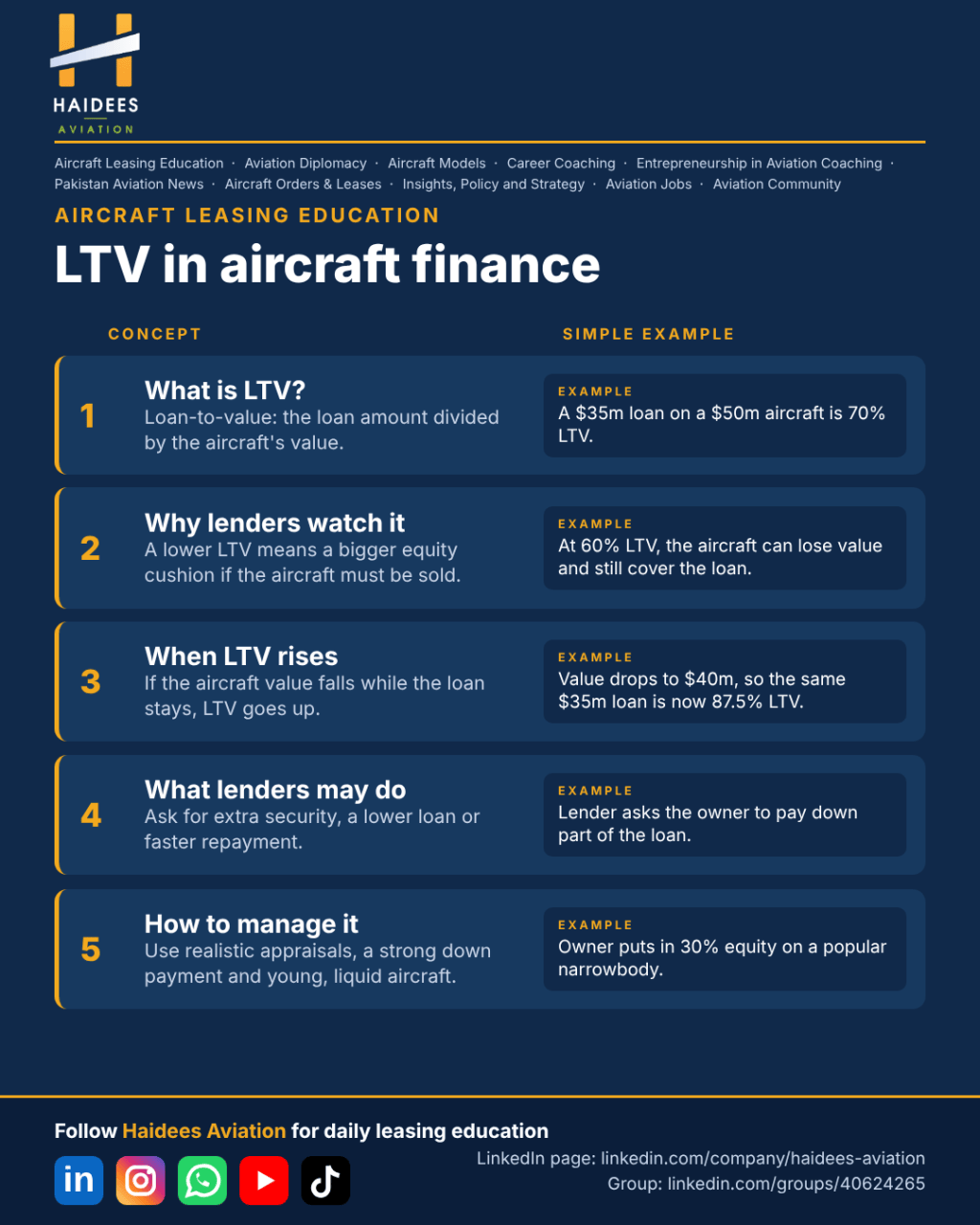
One ratio tells a lender how much cushion it has on an aircraft loan. It is called LTV. What is LTV? Loan-to-value: the loan amount divided by the aircraft’s value. Example: a $35m loan on a $50m aircraft is 70% LTV. Why lenders watch it: a lower LTV means a bigger equity cushion if the…
-
Aircraft ABS explained simply
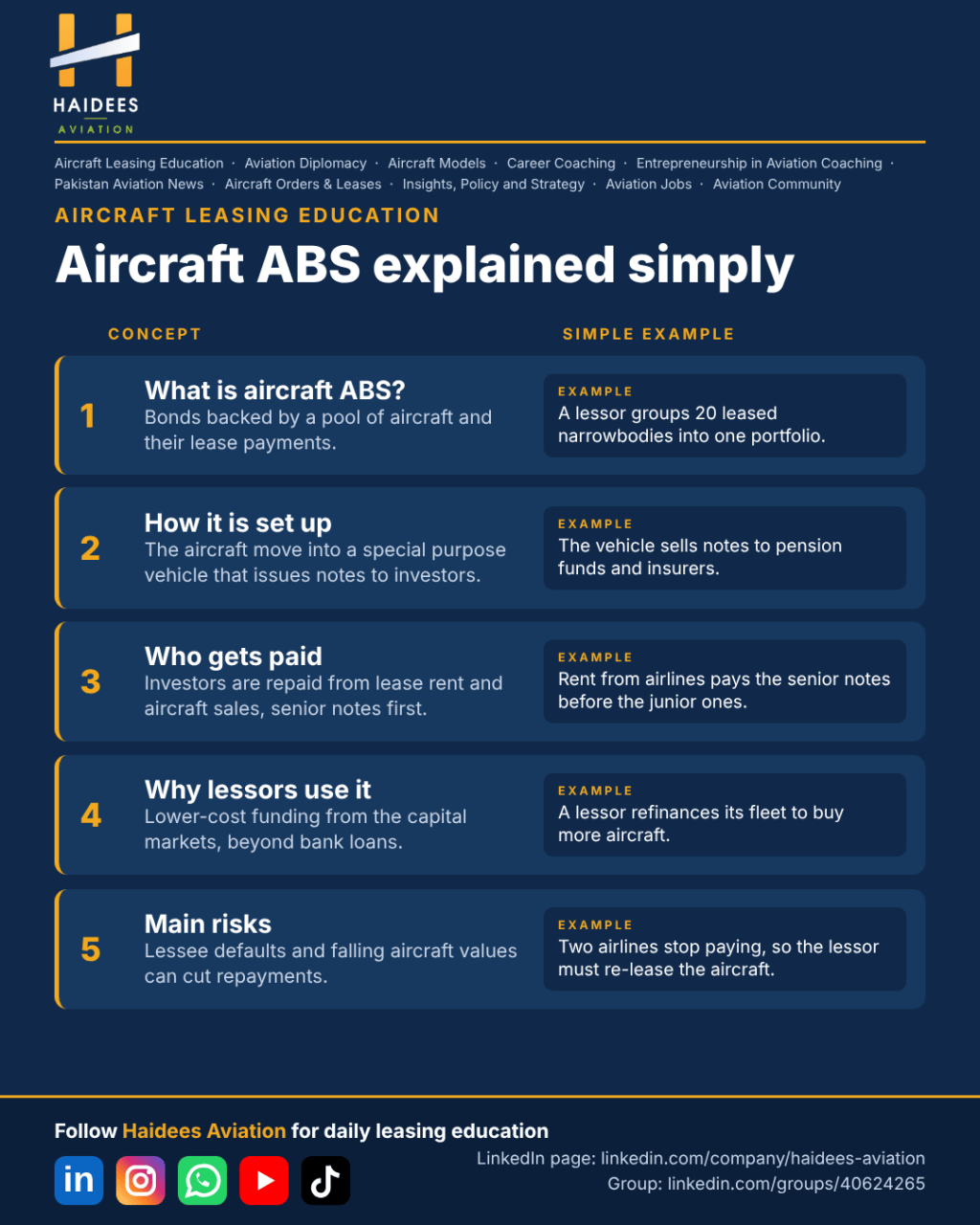
Many lessors fund their fleets with bonds backed by aircraft. That is aircraft ABS, and here is how it works in plain terms. What is aircraft ABS? Bonds backed by a pool of aircraft and their lease payments. Example: a lessor groups 20 leased narrowbodies into one portfolio. How it is set up: the aircraft…
-
ACMI vs dry lease: who pays what
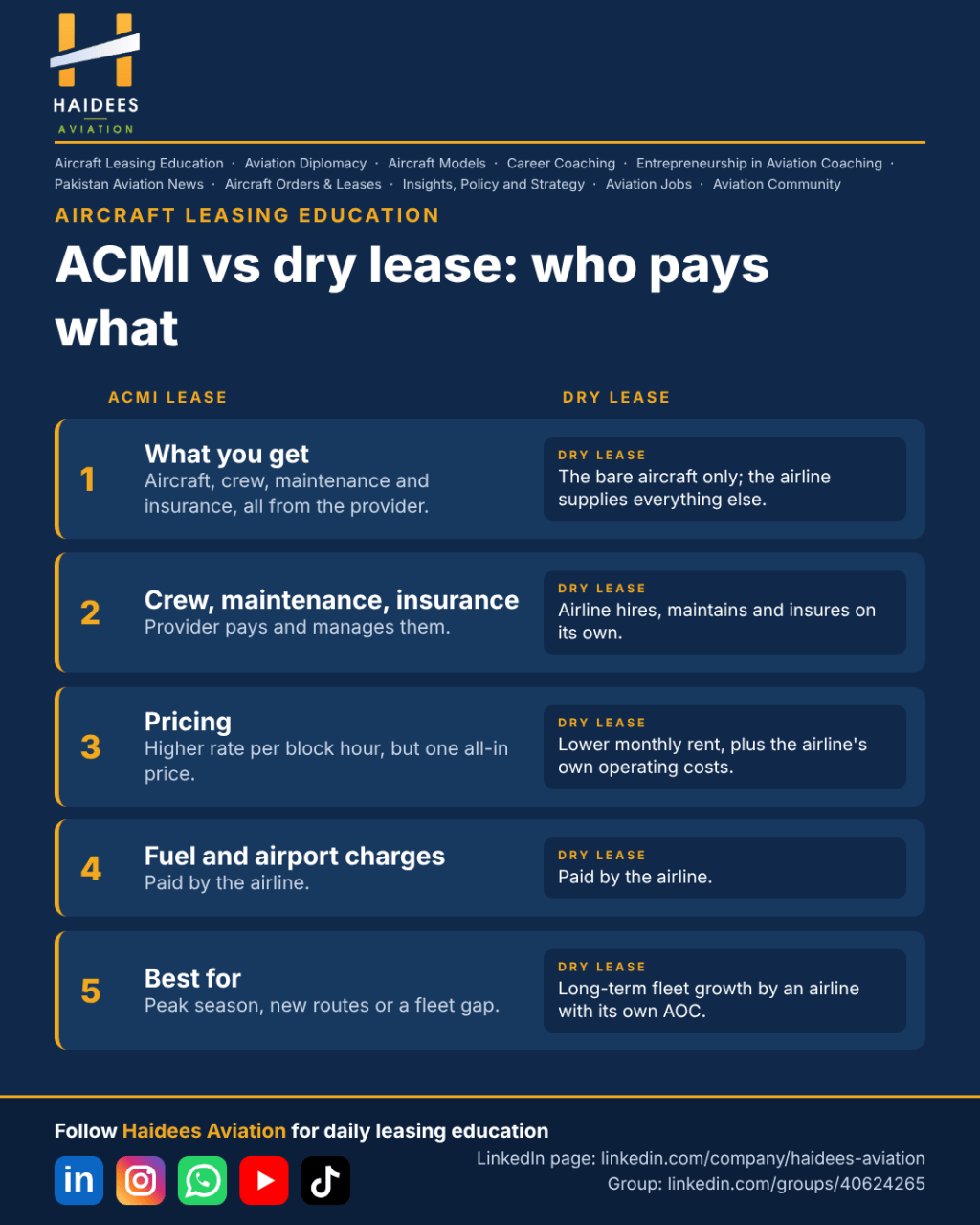
Two airlines can fly the same aircraft and carry very different costs. It depends on whether the deal is ACMI or dry lease. What you get: ACMI gives you aircraft, crew, maintenance and insurance from the provider. A dry lease gives you the bare aircraft only; the airline supplies everything else. Crew, maintenance, insurance: under…
-
Financial lease vs operating lease
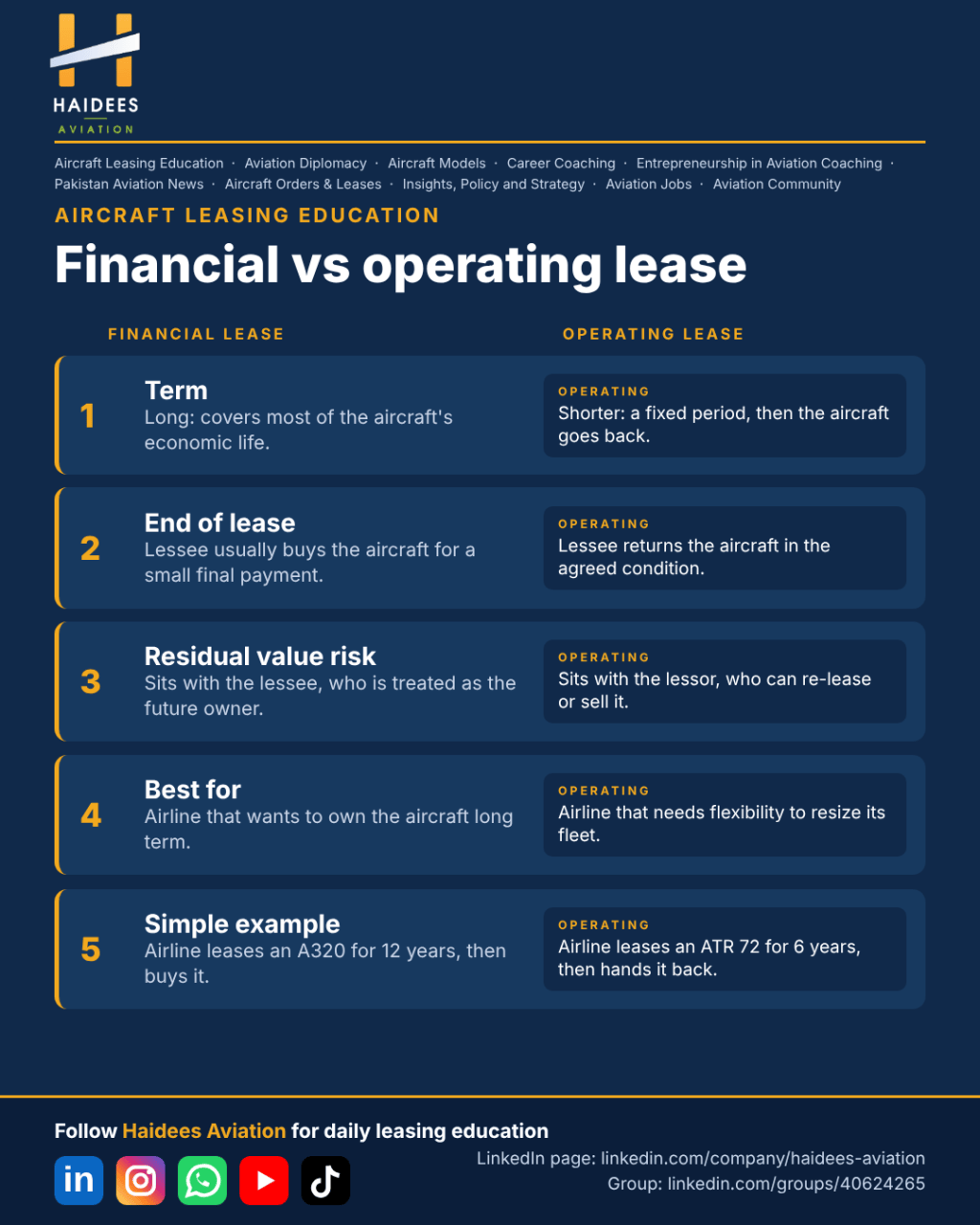
Same aircraft, two very different deals. Here is how a financial lease and an operating lease compare. Term: a financial lease is long and covers most of the aircraft’s economic life. An operating lease is shorter: a fixed period, then the aircraft goes back. End of lease: under a financial lease the lessee usually buys…
-
Five leasing abbreviations you must know
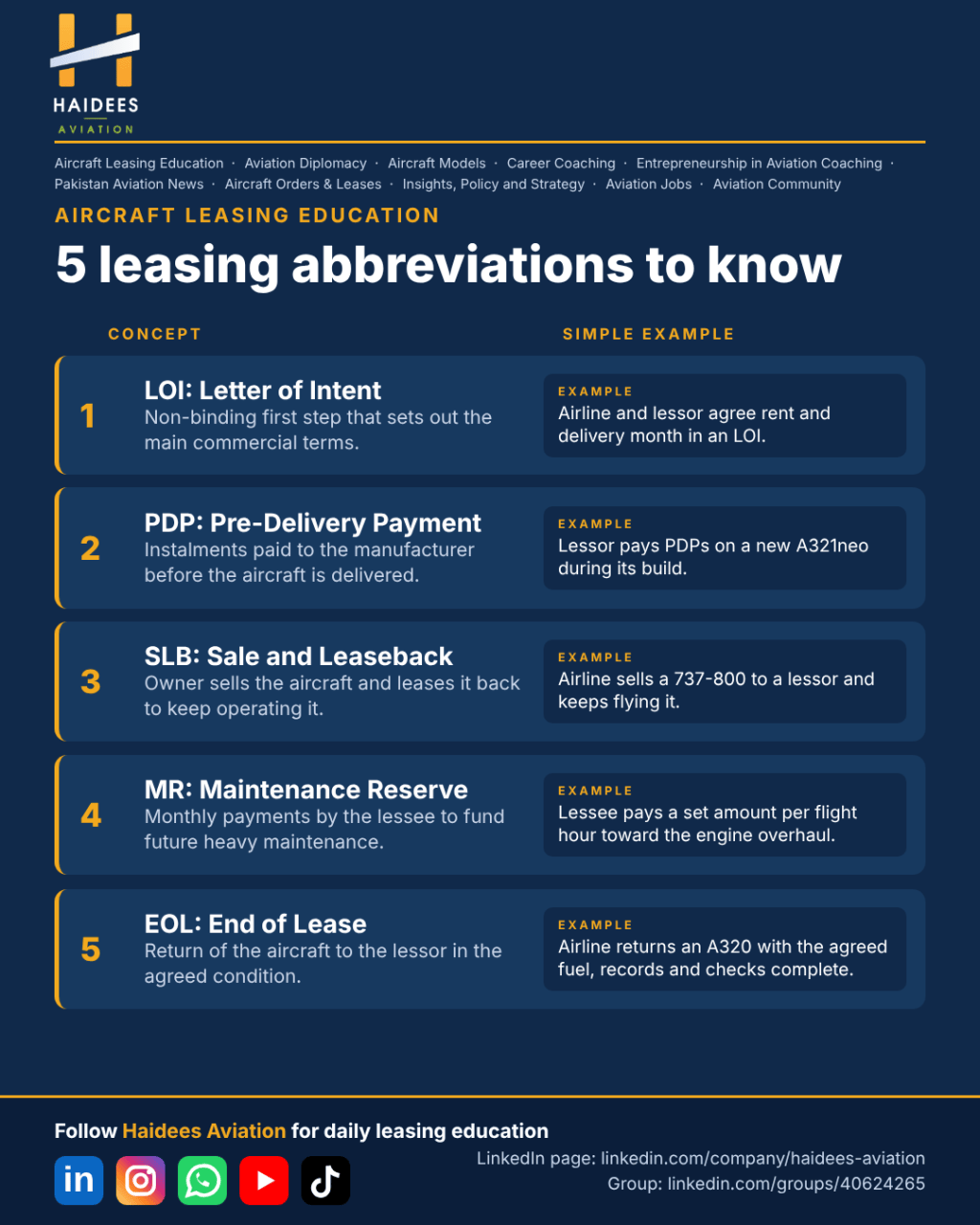
Five short abbreviations decide most aircraft leasing conversations. Here is what each one means. LOI, Letter of Intent: a non-binding first step that sets out the main commercial terms. Example: airline and lessor agree rent and delivery month in an LOI. PDP, Pre-Delivery Payment: instalments paid to the manufacturer before the aircraft is delivered. Example:…
-
Four ways to lease or own an aircraft
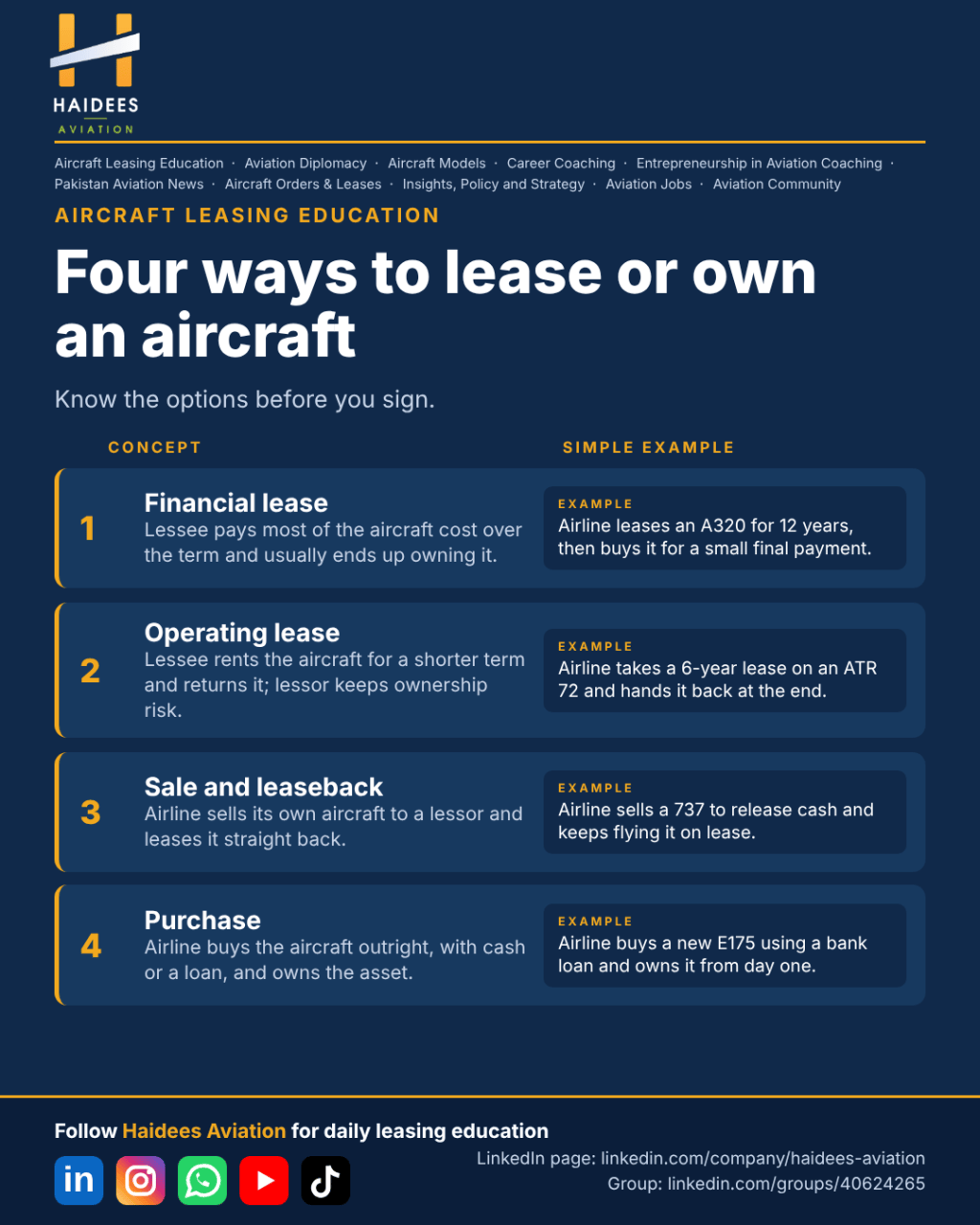
Before you sign anything, know which of the four routes you are on. Financial lease: the lessee pays most of the aircraft cost over the term and usually ends up owning it. Example: an airline leases an A320 for 12 years, then buys it for a small final payment. Operating lease: the lessee rents the…

